Hello!
Well here we go with the assessment, first of all, the links;
Porject proposal :
Mid Point Review:
Written Paper
So those are the links! I've got some drawings I do ocassionaly in lunch breaks during work on the blog, just ignore them for the purposes of this assessment, although some of them have connections to the project itself. I believe I also did some short storyboards way back around october/november There is also lots of written things connected to reality, perception and society, which are connected to our project. They can be found in the blog, just watch for the (MA) tags!
I tried updating this blog as much as I could, but as much as I understand the merits of keeping record of everything I do, I work quite fast and without much organization, which doesn't work well with this type of system. I do try to adapt and learn though, and I believe this year I evolved a lot, both artistically and the way I take responsibilities. I tried to keep this blog alive as much as I can, if you focus on the (MA) tagged posts, you can find anything I updated for the course.
Basically what remains to do with the project is to map what we need on the Hoppala layout. LINK HERE FOR HOPPALA After that, I will do a small documentation of someone actually running about using our program on a smartphone to make a video for the final project. What we are trying to do here is to get people from somewhere to somewhere else. The power of actually mobilising people can open ways for advertisement and many other things, and doing this using a simple application like a smartphone-farmville can actually spread amongst users like a virus.
I want to document what makes people tick. Is it rewards? Appreciation from others? Recognition? Can a small thing like a title for your game character make you go to places in a city and clicking one button? How can we reward people and get them addicted? These are some of the many questions I want to look into. My research paper also looked into this, using Massively multiplayer online games as an example.
What I learned so far during this collaborative project is that working with people is hard. Very hard. Organization, timelines and ideas fly around in a mess, and you do need someone to actually take charge and make decisions at some point. It has been quite fun though, I believe we actually created so many ideas that we can support maybe 3-4 more projects now, if we were given the time and the money. It also has some nice sides as well, someone to share your troubles and hardship is nice to have around, and like I said, bouncing ideas off someone whenever you need is a fantastic opportunity.
The project did change a lot. We started off as a narrative smartphone based application. It had its own problems though. The narrative base gives us a nice background to use, but it also creates a lot of problems programming wise and we realized it could also hinder the game itself, if the people who play the game got stuck within the narrative. Easy interface and fast game play is a bonus for us, we need as many players as we can get.
So we changed into a small one-button game that can be played on the map itself. We will still test-drive the game in Edinburgh, it's a small city where you can walk from one edge to another in 20-30 minutes max. And it will also have a small narrative, but it will be just one page, optional to read, to get people in the mood if they wish. The game itself will be just the map of the city in a grid, where players of two teams just click something like 'sign in' or 'make a mark' button on the grid they are. The more marks a team gets, the more they own that zone. Individuals who click more at different spots get more points, which will lead to small titles and other rewards. The trick here is that we will randomly assign different zones which give bonus points when you sign in from there at a given time space. This, we hope, will get the players to go to these zones. This is the main idea of the project, controlling people with small achievements.
Ease of use and simplicity is our main goal now. We need to get this program running as fast as we can. Anything else can come later, be it artwork, design or background for the game. I believe if we can get a simple model running, we will find our problems and start fixing them.
There are several other application types that we can look into but we had to decide quick now as there is only two months left in our schedule. One really nice application that may suit our needs is; Hawlett-Packards Mscape but we will stick with Hoppala, as we started working on it.
During our discussions in the class I've gotten quite positive feedback which made me reflect on the project in a more critical way. While you're working with someone who is close to your ideas and thinking system, it is quite easy to get lost within the dialogue and stop seeing what you're doing objectively. The meetings and the crits we had in class, and the presentations really helped me to hear myself from a 3rd person perspective, and find the problems in the project that I'm doing. After each session I met with my collegue and we sat down and went through what was spoken. Interestingly enough, he has similar cases of meetings with his peers and the feedback we take became quite important for us.
I tried adding what I could to others as well. I hope I aided them. I would try to remember everything I said but what ideas I had while we were talking were lost within the conversations. I could only remember asking Jes about her Low/high quality image differences, and the movies on the internet and how users downloaded these low quality images next to the high-def blueray rips.
Darren seems like he knows his business with programming. I believe he just needs some push towards the design aspect. He seems reluctant to do anything creative. This is understandable although I believe if he leaves his comfort zone, he can accomplish fantastic things considering the technological advantage he has under his belt.
That's about it, I hope I didn't miss anything out. Like I said, feel free to check the blog around, there might be some interesting stuff connected to the project. Thanks for reading!
-Sinan
Showing posts with label MA. Show all posts
Showing posts with label MA. Show all posts
Tuesday, May 24, 2011

Friday, December 10, 2010
(MA) Project Proposal
Project Proposal – Sinan Atamer
1. Working Title:
This project is creating a GPS based smart phone application, which will enable the users to interact with the real world in a series of mini-quests that will take them around a specific city.
2. Aims + Objectives:
The aim of this project is to complete a fully running GPS based smart phone application that will enable the user to interact with the real world in a series of puzzle/quests where he will eventually go through several small objectives and each step will bring him closer to the imaginary parallel universe that we will create. The player will see this imaginary parallel universe through a series of artwork that I will make. My previous education as an illustrator should be helpful in this process.
The application will send the user around the city to complete a series of quests. It’s not decided yet whether or not for these quests to pop up whenever the player runs through a specific part of the town he lives in or he will be strictly sent to the places we want him to go, but basically as he completes these quests, he will get more complicated visions of several more buildings/monuments etc. that will give him the clues where to go next.
The objective is to help the user experience the fact that the real world might be unreal, and what he sees is not what everyone else does. The idea of perception is quite important here. Although the project has various aims since it’s a joint project, I personally want to see how art and games can effect the perception of reality, and how the player experiences these steps his feelings and his emotions throughout the process. The usage of a mobile phone or any other object as a “looking glass” to the other side is something worth looking into.
We also have to create a working program. We are aiming our project towards the Android system, as we’ve spoken with many people and most of the professionals in this area told us to avoid Apple software. The thing that may go wrong is the programming phase. We still haven’t found a proper programmer for android applications, although a search is still ongoing. Worst case scenario will be using barcode reader programs, which are open source and quite easy to use, but a GPS tracking version would be ideal.
There’s also the phase of creating and deciding what our “other world” will be, and creating the artwork for that.
3. Context:
Mobile phones are becoming context-aware, with GPS positioning, recognition of objects by infrared or wireless tags, and automatic interpretation of images. They’re offering opportunities to support new forms of learning and recreational activities through contextual support for field trips, location-based guides, and environmental studies and to assist everyday activities. There are many studies around this area, many of them trying to engage the user in small “treasure hunt” type games or mostly informative text based applications. The idea of combining a fully made game that makes the user engaged in both a storyline and a location based quest system is however, quite new. Adding the touch of an artist to a project like this and seeing the player’s interaction with the game and recording their experience is an unexplored zone.
There are many games that deal with location based programming. Geocaching is the most prominent example with a large community. It is nominally a single-player kind of treasure hunt which is usually played using hand-held GPS receivers with user-hidden boxes.
Tourality is a real life multiplayer GPS game for mobile phones that support JavaME and GPS (integrated in the mobile phone or as an external Bluetooth). The challenge is to reach geographically defined spots by running, biking or driving before others in realtime. So called 'Spots', 'Points of Interest' and 'Game-Templates' can be created with Google Maps by users in supported areas on the website. This user-generated content is the basis for outdoor games. Tourality offers a singleplayer and two multiplayer (player vs. player and team vs. team) modes. Currently the game is available as a free beta version.
Torpedo Bay uses the area in and around you to avoid being killed by various ocean warships (carriers etc.) To survive, you must move in your neighborhood to get more ammunition and health to stay alive. GPS enabled mobile handsets allow for real time location information.
There are also the University of Nottingham’s LSRI (Learning Sciences Research Institute) research projects. They involve with mostly smart phone or data pad applications. Their Mixed Reality Lab has been home to several projects that are involved in our area.
There’s also Blast Theory. Blast Theory is a Brighton-based artists’ group, whose work mixes interactive media, digital broadcasting and live performance. Works such as Can You See Me Now? (2001), a game of chase through real and virtual city streets, have seen Blast Theory mix video games and performance, with Can You See Me Now? and You Get Me (2008) being open to a worldwide audience via the internet. Recent work uses mobile technologies such as text messaging, MMS messaging and 3G phones with the aim of “exploring how technology might be considered to create new cultural spaces in which the work is customized and personalized for each participant”
4: Methodology:
The research methods we’re using are action reflection, and library based literature. We have also visited several places and met with couple of people who are working and/or researching in our area, they work with the Napier University, and the University of Nottingham. Making contacts like this enabled us a flowing web of information.
I’m in the process of recording every single idea in my sketchbooks, an habit gained as an artist. I’m also trying to add everything to my blog, however I’m a bit unused to such recording methods, and some stuff left behind time to time. We have weekly meeting, even though its on random days of the week, where we sit down and chat about what ideas came to mind.
The process of this project will be recorded digitally on the blog, and the project experimentation will be recorded on video. We will have a player with the game interact with it while we experiment and see how it works.
Some ideas that came to mind so far are the idea of making a 3D world using Google Earth’s street view. I wanted to collage on a full street where the viewer could turn his vision around using the phone as a looking glass, but this may be a far fetched idea. Other things that might be considered are using sound based games to make the player interact with the phone more, and putting him in funny situations, like where he would have to shout in a library (where he will be pinpointed by the GPS) to “calculate” the trajectory of something the quest requires, or using the phone as a mirror to find a vampire in a room where the phone would recognize the walls from its camera and view the 180 degrees opposite on its screen. Although I keep coming up with different ideas like this, we will be really limited with the programming capabilities, so they’re left for later.
5. Outcomes:
The final presentation will be a fully working application/game on the android phones. There will also be a series of artworks made for the project, and hopefully a video documentary of a user working through the game.
7. Work Plan:
- Find a programmer
- The research part, finding a city to build our game on (probably Edinburgh since its feel is old and mystical)
- Creating the game, the quests, the layers, mostly the written part.
- Creating the artwork.
8. Bibliography:
Walter Benjamin - the work of art in the age of mechanical reproduction
Christine Boyer - The city of collective memory
John Seeley Brown - The Coming Age of Calm Technology
Gaston Bachelard – The Poetics of Space
E.H Gombrich – The Uses of Images
John Carroll - Making use - Scenario based design of human computer interactions
Lev Manovich – The Language of New Media
Christiane Paul – Digital Art
John Berger – Ways of Seeing
Manuel Castells - the information city
Manuel Castells - The internet galaxy
Steven graham - Splintering urbanism: Networked infrastructures, technological mobilities, and the urban condition
Steve Shafer - Ten Dimensions of Ubiquitous Computing
Malcolm McCullough - Digital ground
1. Working Title:
This project is creating a GPS based smart phone application, which will enable the users to interact with the real world in a series of mini-quests that will take them around a specific city.
2. Aims + Objectives:
The aim of this project is to complete a fully running GPS based smart phone application that will enable the user to interact with the real world in a series of puzzle/quests where he will eventually go through several small objectives and each step will bring him closer to the imaginary parallel universe that we will create. The player will see this imaginary parallel universe through a series of artwork that I will make. My previous education as an illustrator should be helpful in this process.
The application will send the user around the city to complete a series of quests. It’s not decided yet whether or not for these quests to pop up whenever the player runs through a specific part of the town he lives in or he will be strictly sent to the places we want him to go, but basically as he completes these quests, he will get more complicated visions of several more buildings/monuments etc. that will give him the clues where to go next.
The objective is to help the user experience the fact that the real world might be unreal, and what he sees is not what everyone else does. The idea of perception is quite important here. Although the project has various aims since it’s a joint project, I personally want to see how art and games can effect the perception of reality, and how the player experiences these steps his feelings and his emotions throughout the process. The usage of a mobile phone or any other object as a “looking glass” to the other side is something worth looking into.
We also have to create a working program. We are aiming our project towards the Android system, as we’ve spoken with many people and most of the professionals in this area told us to avoid Apple software. The thing that may go wrong is the programming phase. We still haven’t found a proper programmer for android applications, although a search is still ongoing. Worst case scenario will be using barcode reader programs, which are open source and quite easy to use, but a GPS tracking version would be ideal.
There’s also the phase of creating and deciding what our “other world” will be, and creating the artwork for that.
3. Context:
Mobile phones are becoming context-aware, with GPS positioning, recognition of objects by infrared or wireless tags, and automatic interpretation of images. They’re offering opportunities to support new forms of learning and recreational activities through contextual support for field trips, location-based guides, and environmental studies and to assist everyday activities. There are many studies around this area, many of them trying to engage the user in small “treasure hunt” type games or mostly informative text based applications. The idea of combining a fully made game that makes the user engaged in both a storyline and a location based quest system is however, quite new. Adding the touch of an artist to a project like this and seeing the player’s interaction with the game and recording their experience is an unexplored zone.
There are many games that deal with location based programming. Geocaching is the most prominent example with a large community. It is nominally a single-player kind of treasure hunt which is usually played using hand-held GPS receivers with user-hidden boxes.
Tourality is a real life multiplayer GPS game for mobile phones that support JavaME and GPS (integrated in the mobile phone or as an external Bluetooth). The challenge is to reach geographically defined spots by running, biking or driving before others in realtime. So called 'Spots', 'Points of Interest' and 'Game-Templates' can be created with Google Maps by users in supported areas on the website. This user-generated content is the basis for outdoor games. Tourality offers a singleplayer and two multiplayer (player vs. player and team vs. team) modes. Currently the game is available as a free beta version.
Torpedo Bay uses the area in and around you to avoid being killed by various ocean warships (carriers etc.) To survive, you must move in your neighborhood to get more ammunition and health to stay alive. GPS enabled mobile handsets allow for real time location information.
There are also the University of Nottingham’s LSRI (Learning Sciences Research Institute) research projects. They involve with mostly smart phone or data pad applications. Their Mixed Reality Lab has been home to several projects that are involved in our area.
There’s also Blast Theory. Blast Theory is a Brighton-based artists’ group, whose work mixes interactive media, digital broadcasting and live performance. Works such as Can You See Me Now? (2001), a game of chase through real and virtual city streets, have seen Blast Theory mix video games and performance, with Can You See Me Now? and You Get Me (2008) being open to a worldwide audience via the internet. Recent work uses mobile technologies such as text messaging, MMS messaging and 3G phones with the aim of “exploring how technology might be considered to create new cultural spaces in which the work is customized and personalized for each participant”
4: Methodology:
The research methods we’re using are action reflection, and library based literature. We have also visited several places and met with couple of people who are working and/or researching in our area, they work with the Napier University, and the University of Nottingham. Making contacts like this enabled us a flowing web of information.
I’m in the process of recording every single idea in my sketchbooks, an habit gained as an artist. I’m also trying to add everything to my blog, however I’m a bit unused to such recording methods, and some stuff left behind time to time. We have weekly meeting, even though its on random days of the week, where we sit down and chat about what ideas came to mind.
The process of this project will be recorded digitally on the blog, and the project experimentation will be recorded on video. We will have a player with the game interact with it while we experiment and see how it works.
Some ideas that came to mind so far are the idea of making a 3D world using Google Earth’s street view. I wanted to collage on a full street where the viewer could turn his vision around using the phone as a looking glass, but this may be a far fetched idea. Other things that might be considered are using sound based games to make the player interact with the phone more, and putting him in funny situations, like where he would have to shout in a library (where he will be pinpointed by the GPS) to “calculate” the trajectory of something the quest requires, or using the phone as a mirror to find a vampire in a room where the phone would recognize the walls from its camera and view the 180 degrees opposite on its screen. Although I keep coming up with different ideas like this, we will be really limited with the programming capabilities, so they’re left for later.
5. Outcomes:
The final presentation will be a fully working application/game on the android phones. There will also be a series of artworks made for the project, and hopefully a video documentary of a user working through the game.
7. Work Plan:
- Find a programmer
- The research part, finding a city to build our game on (probably Edinburgh since its feel is old and mystical)
- Creating the game, the quests, the layers, mostly the written part.
- Creating the artwork.
8. Bibliography:
Walter Benjamin - the work of art in the age of mechanical reproduction
Christine Boyer - The city of collective memory
John Seeley Brown - The Coming Age of Calm Technology
Gaston Bachelard – The Poetics of Space
E.H Gombrich – The Uses of Images
John Carroll - Making use - Scenario based design of human computer interactions
Lev Manovich – The Language of New Media
Christiane Paul – Digital Art
John Berger – Ways of Seeing
Manuel Castells - the information city
Manuel Castells - The internet galaxy
Steven graham - Splintering urbanism: Networked infrastructures, technological mobilities, and the urban condition
Steve Shafer - Ten Dimensions of Ubiquitous Computing
Malcolm McCullough - Digital ground
Wednesday, December 1, 2010
(MA) The Mind's Eye, and Realism
Some things to read and think about;
The mind's eye;
The phrase "mind's eye" refers to the human ability for visualization, i.e., for the experiencing of visual mental imagery; in other words, one's ability to "see" things with the mind.
And Representative Realism;
Representational realism, related to indirect realism, is a philosophical concept, broadly equivalent to the accepted view of perception in natural science. Unfortunately, the meaning of the theory is dependent on the user's interpretation of words like 'perceive', 'reality' etc. such that in the longstanding debate between representational (indirect) and naive (direct) realists each side will always claim that the other has not understood their position. Thus, readers of this account must ask what the writer(s) believe(s) their words to mean.
Representational realism states that we do not (and cannot) perceive the external world as it really is; instead we know only our ideas and interpretations of the way the world is. This might be said to indicate that a barrier or 'veil of perception' prevents first-hand knowledge of the world, but the representational realist would deny that 'first hand knowledge' in this sense is a coherent concept, since knowledge is always via some means.
An indirect realist believes our ideas of the world are interpretations of sense data derived from a real external world (unlike idealists). The debate then occurs about how ideas or interpretations arise. At least since Newton, natural scientists have made it clear that the current scope of science cannot address this. Nevertheless, the alternative, that we have knowledge of the outside world unconstrained by our means of access through sense organs that does not require interpretation would appear to be inconsistent with every day observation.
Aristotle was the first to provide an in-depth description of indirect realism. In On the Soul he describes how the eye must be affected by changes in an intervening medium rather than by objects themselves. He then speculates on how these sense impressions can form our experience of seeing and reasons that an endless regress would occur unless the sense itself were self aware. He concludes by proposing that the mind is the things it thinks. He calls the images in the mind "ideas".
Indirect realism has been popular in the history of philosophy and has been developed by many philosophers including Bertrand Russell, Baruch Spinoza, René Descartes, and John Locke.
Representationalism is one of the key assumptions of cognitivism in psychology.
The mind's eye;
The phrase "mind's eye" refers to the human ability for visualization, i.e., for the experiencing of visual mental imagery; in other words, one's ability to "see" things with the mind.
And Representative Realism;
Representational realism, related to indirect realism, is a philosophical concept, broadly equivalent to the accepted view of perception in natural science. Unfortunately, the meaning of the theory is dependent on the user's interpretation of words like 'perceive', 'reality' etc. such that in the longstanding debate between representational (indirect) and naive (direct) realists each side will always claim that the other has not understood their position. Thus, readers of this account must ask what the writer(s) believe(s) their words to mean.
Representational realism states that we do not (and cannot) perceive the external world as it really is; instead we know only our ideas and interpretations of the way the world is. This might be said to indicate that a barrier or 'veil of perception' prevents first-hand knowledge of the world, but the representational realist would deny that 'first hand knowledge' in this sense is a coherent concept, since knowledge is always via some means.
An indirect realist believes our ideas of the world are interpretations of sense data derived from a real external world (unlike idealists). The debate then occurs about how ideas or interpretations arise. At least since Newton, natural scientists have made it clear that the current scope of science cannot address this. Nevertheless, the alternative, that we have knowledge of the outside world unconstrained by our means of access through sense organs that does not require interpretation would appear to be inconsistent with every day observation.
Aristotle was the first to provide an in-depth description of indirect realism. In On the Soul he describes how the eye must be affected by changes in an intervening medium rather than by objects themselves. He then speculates on how these sense impressions can form our experience of seeing and reasons that an endless regress would occur unless the sense itself were self aware. He concludes by proposing that the mind is the things it thinks. He calls the images in the mind "ideas".
Indirect realism has been popular in the history of philosophy and has been developed by many philosophers including Bertrand Russell, Baruch Spinoza, René Descartes, and John Locke.
Representationalism is one of the key assumptions of cognitivism in psychology.
Tuesday, November 23, 2010
(MA) Something to read
Well, tonight I got some reading to do, I'll share here. It's about Simulacra and Simulation (Simulacres et Simulation in French) a philosophical treatise by Jean Baudrillard seeking to interrogate the relationship among reality, symbols, and society. I thought it would be useful for our project, which deals with the reality and the other side. I'll write what I think about it later as a thought out piece later on.
Let's just read now;
Let's just read now;
| “ | The simulacrum is never that which conceals the truth--it is the truth which conceals that there is none. The simulacrum is true. | ” |
Simulacra and Simulation is most known for its discussion of images, signs, and how they relate to contemporaneity. Baudrillard claims that our current society has replaced all reality and meaning with symbols and signs, and that human experience is of a simulation of reality. Moreover, these simulacra are not merely mediations of reality, nor even deceptive mediations of reality; they are not based in a reality nor do they hide a reality, they simply hide that anything like reality is irrelevant to our current understanding of our lives. The simulacra that Baudrillard refers to are the significations and symbolism of culture and media that construct perceived reality, the acquired understanding by which our lives and shared existence is rendered legible; Baudrillard believed that society has become so saturated with these simulacra and our lives so saturated with the constructs of society that all meaning was being rendered meaningless by being infinitely mutable. Baudrillard called this phenomenon the "precession of simulacra".
"Simulacra and Simulation" breaks the sign-order into 4 stages:
- The first stage is a faithful image/copy, where we believe, and it may even be correct that, a sign is a "reflection of a profound reality" (pg 6), this is a good appearance, in what Baudrillard called "the sacramental order".
- The second stage is perversion of reality, this is where we believe the sign to be an unfaithful copy, which "masks and denatures" reality as an "evil appearance-it is of the order of maleficence". Here, signs and images do not faithfully show us reality, but can hint at the existence of something real which the sign itself is incapable of encapsulating.
- The third stage masks the absence of a profound reality, where the simulacrum pretends to be a faithful copy, but it is a copy with no original. Signs and images claim to represent something real, but no representation is taking place and arbitrary images are merely suggested as things which they have no relationship to. Baudrillard calls this the "order of sorcery".
- The fourth stage is pure simulation, in which the simulacrum has no relationship to any reality whatsoever. Here, signs merely reflect other signs and any claim to reality on the part of images or signs is only of the order of other such claims.
Simulacra and Simulation identifies three types of simulacra and identifies each with a historical period:
- First order, associated with the premodern period, where the image is clearly an artificial placemarker for the real item. The uniqueness of objects and situations marks them as irreproducibly real and signification obviously gropes towards this reality.
- Second order, associated with the modernity of the Industrial Revolution, where distinctions between image and reality break down due to the proliferation of mass-reproducible copies of items, turning them into commodities. The commodity's ability to imitate reality threatens to replace the original version, especially when the individual person is only concerned with consuming for some utility a functional facsimile.
- Third order, associated with the postmodernity, where the simulacrum precedes the original and the distinction between reality and representation vanishes. There is only the simulacrum, and originality becomes a totally meaningless concept.[2]
Baudrillard theorizes that the lack of distinctions between reality and simulacra originates in several phenomena:
- Contemporary media including television, film, print and the Internet, which are responsible for blurring the line between goods that are needed and goods for which a need is created by commercial images.
- Exchange value, in which the value of goods is based on money rather than usefulness.
- Multinational capitalism, which separates produced goods from the plants, minerals and other original materials and the processes used to create them.
- Urbanization, which separates humans from the natural world.
- Language and ideology, in which language is used to obscure rather than reveal reality when used by dominant, politically powerful groups.
A specific analogy that Baudrillard uses is a fable derived from On Exactitude in Science by Jorge Luis Borges. In it, a great Empire created a map that was so detailed it was as large as the Empire itself. The actual map grew and decayed as the Empire itself conquered or lost territory. When the Empire crumbled, all that was left was the map. In Baudrillard's rendition, it is the map that people live in, the simulation of reality, and it is reality that is crumbling away from disuse.
- The transition from signs which dissimulate something to signs which dissimulate that there is nothing, marks the decisive turning point. The first implies a theology of truth and secrecy (to which the notion of ideology still belongs). The second inaugurates an age of simulacra and simulation, in which there is no longer any God to recognize his own, nor any last judgment to separate truth from false, the real from its artificial resurrection, since everything is already dead and risen in advance.[3]
It is important to note that when Baudrillard refers to the "precession of simulacra" in Simulacra and Simulation, he is referring to the way simulacra have come to precede the real in the sense mentioned above, rather than to any succession of historical phases of the image. Referring to "On Exactitude in Science", he argued that just as for contemporary society the simulated copy had superseded the original object, so, too, the map had come to precede the geographic territory (c.f. Map–territory relation), e.g. the first Gulf War (see below): the image of war preceded real war.
- Henceforth, it is the map that precedes the territory - precession of simulacra - it is the map that engenders the territory and if we were to revive the fable today, it would be the territory whose shreds are slowly rotting across the map.[4]
Friday, November 19, 2010
Thursday, November 18, 2010
(MA) Alchemy !
Hey, its late, but I got something worthy to put here.
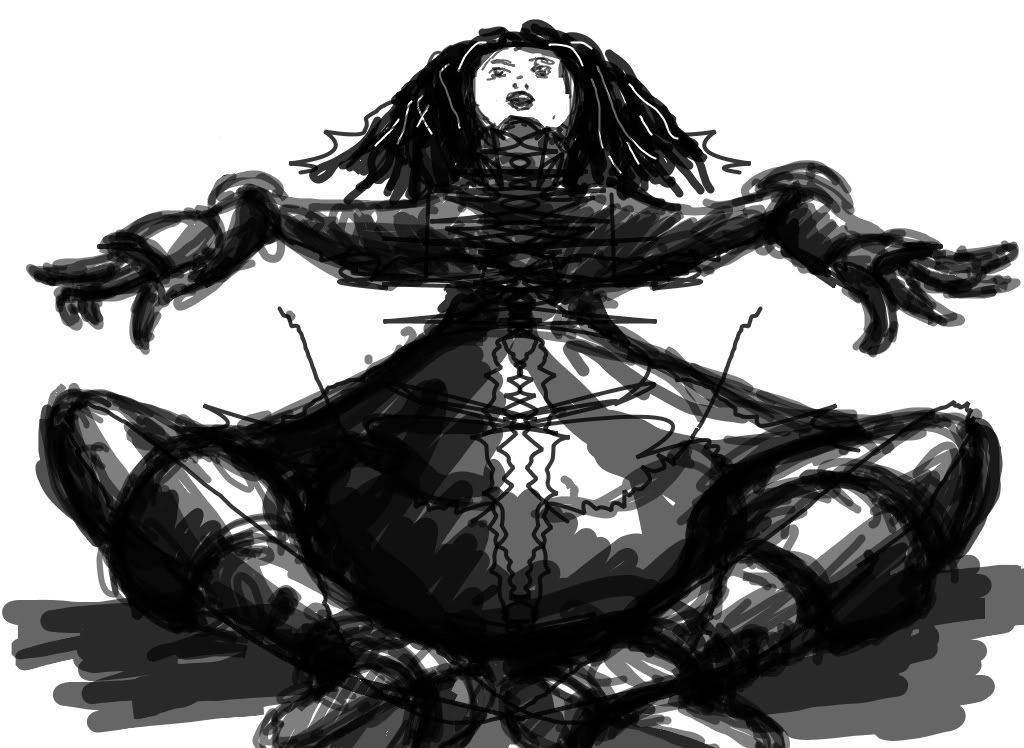
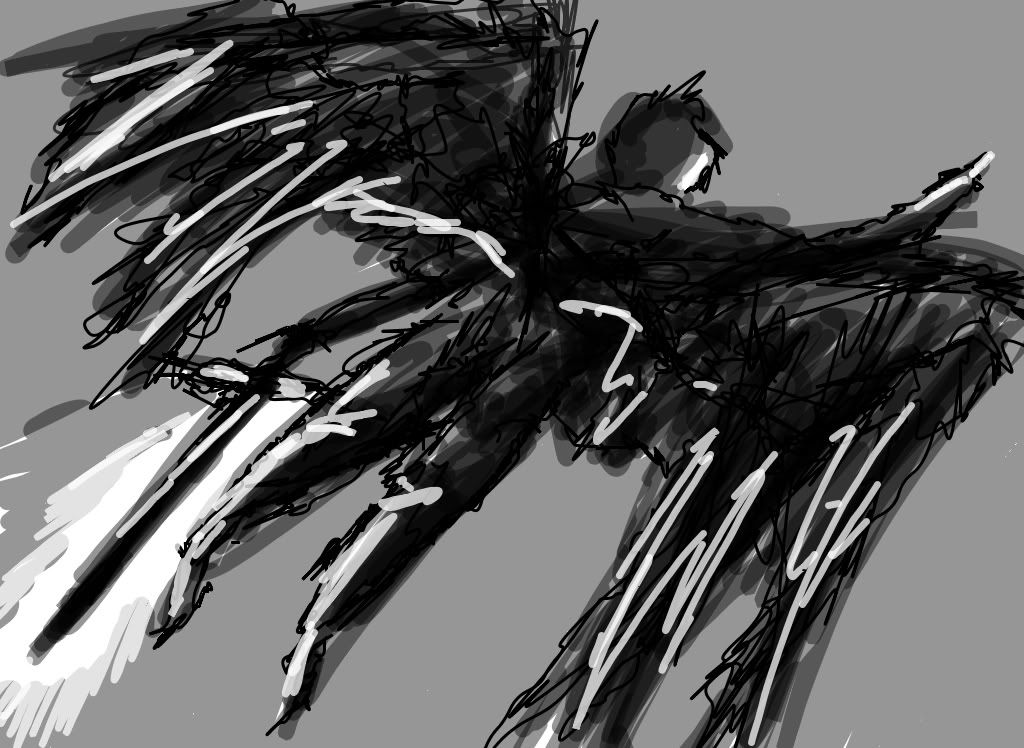
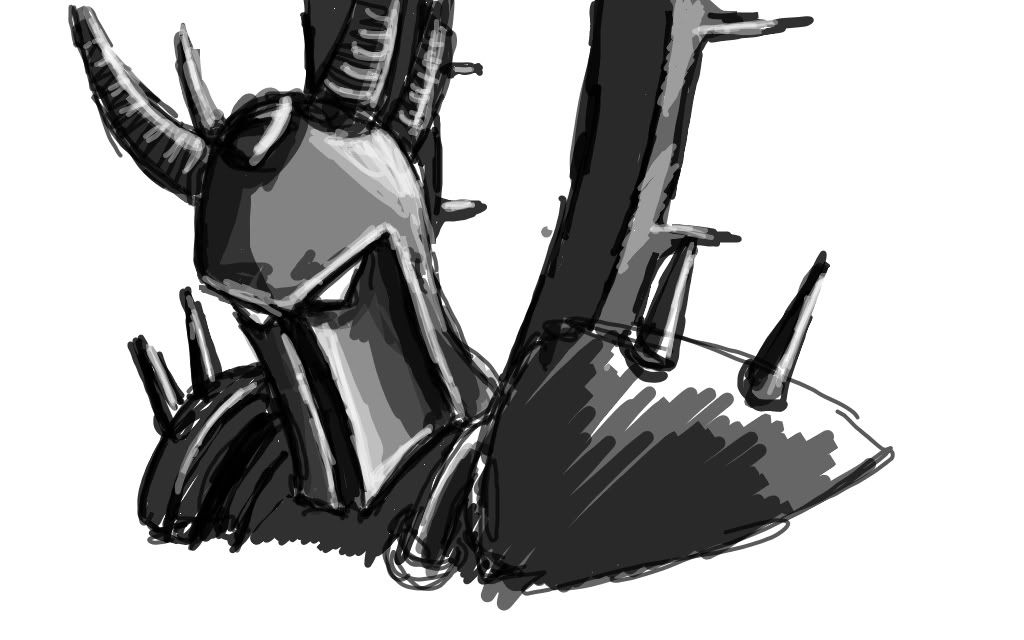
It's called alchemy, an open drawing program.
http://al.chemy.org/
It's just...brilliant to put into words. The program is fast, very fast, it has very limited selection, and unfortunately no pressure support for tablets, but I'm sure that will come fast.
The simplicity of the program makes you work like magic, just draw draw draw. It's not for making complete artworks though, just small sketches and concept work to move on later.
This was just 3-4 minutes on the program, only using 1 brush. Te-hee!

It's called alchemy, an open drawing program.
http://al.chemy.org/
It's just...brilliant to put into words. The program is fast, very fast, it has very limited selection, and unfortunately no pressure support for tablets, but I'm sure that will come fast.
The simplicity of the program makes you work like magic, just draw draw draw. It's not for making complete artworks though, just small sketches and concept work to move on later.
This was just 3-4 minutes on the program, only using 1 brush. Te-hee!
(MA) Not much this week
Like the title says, nothing much this week. I've been feeling a bit down and ill for some reason, even though I have no physical symptoms, apart from a horrible headache which comes and goes.
We discussed a bit on what to do next, I'll be doing couple of quick storyboard drawing for our project to explain it a bit better, atleast visually.
Apart from that, I took a course on Puredata (or PD), a programming language for visual/audio software, however I really didn't like it's language that much. The idea of memorising objects to write a visual language with drag&drop boxes didn't appeal to me, and the program looks like it's meant for a more audio-related crowd.
Anyways, I'll update more once I got some stuff going on. Oh and, mini note, I got on facebook. hurray :(
We discussed a bit on what to do next, I'll be doing couple of quick storyboard drawing for our project to explain it a bit better, atleast visually.
Apart from that, I took a course on Puredata (or PD), a programming language for visual/audio software, however I really didn't like it's language that much. The idea of memorising objects to write a visual language with drag&drop boxes didn't appeal to me, and the program looks like it's meant for a more audio-related crowd.
Anyways, I'll update more once I got some stuff going on. Oh and, mini note, I got on facebook. hurray :(
Friday, November 12, 2010
(MA) The Edinburgh trip, and the seeds of the project
Ok (phew) where to begin;
It all started on 4th of november. I mean, I was planning on going to Edinburgh at some point, but not then. I finished my job interview at 2pm, and called Serkan, with whom we'll be doing this project this year, and he just said, "hop on a train and come to Edinburgh now, you'll never be able to do that if you get the job."
Oh well...
I went home, packed and got on the 5pm train. By the way, small detail, never-ever-ever go on peak hour trains, they're bloody expensive. Took me 5 miserable no-internet hours to get there, and by the time I arrived, I set my foot on this empty city. Even the train station, which is supposed to be full of people was deserted.

For future reference, this is Serkan.
Serkan picked me up, and after some lengthly chats, we went to sleep. The next day was quite amazing for me. As an artist, many things effect me quite dramatically. Aesthetics, culture and many other small details fill me with emotions. I was not ready for this city though.

Spires, spires and more gothic buildings! oh my!

As if saved in a time bubble from 18th century, Edinburgh looks like one of those cities you see in movies about duellists, mages, dark sorcery and witches. From every corner I expected people with rapiers and flintlock pistols running about. The walls and the architecture simply mirrored this old era. Apart from couple of buildings that stood out like 1980's architecture nightmares with the "modern" title (especially bank buildings) The city throughout is able to give you this feeling. I sincerely suggest anyone who has the ability to go there see it for yourselves.

Even random buildings have arrow-slits!

And the city has a castle built on a cliff in the middle of it.
Anyways, focusing on the project. It was the start of this year when Serkan came up with the idea of using my skills not for just computer related imagery, but for mobile phones as well. To be completely honest with you, I still use my old sony w810 cellphone, an ancient history from 2005. I've played around with smartphones before when I had the chance, but the idea of connecting to internet wherever just scares me, as I can quickly get addicted and instead of doing my normal chores while travelling, which is reading many many books, I would just chat online with friends. The idea was quite ungrown at that time though. We just had the idea of making a narrative story aided with imagery, which would be on a mobile.
There was a lot of brainstorming as we walked around Edinburgh like proper tourists, and to be honest, it was my first time visiting somewhere with a camera, I just always hated the idea, but damn it was fun!


Anyways, what we have in mind right now is a game where people will walk about in a city, unlocking clues and mysteries, just like a detective movie, or the DaVinci code(urgh). It's going to be a "Location Based Narrative Advanture Game which plays with your sense of Reality" if we need long and unusable titles for the future!
We came up with seperate ideas. I wanted to use the telephone screen like a HUD (heads up display) you have in games and fighter jets, where you would be informed about your surroundings, using the device as a "Looking Glass" to the real world. I wanted people to twirl, look through and just walk around using their cellphones like a mirror in a dark room when they couldn't see the vampire that was hunting them. I want people to look at their smartphones not as a smartphone, but something arcane and magic which has a special value.
Serkan wants to make the narrative into layers. The idea is, while the player is playing the game, he will gradually unlock layers into the unreal, seperating our world from what we want to show.
The final layer will be something completely different, something maybe mad to see, a mirroring of our reality in some wicked dimension.
Other ideas flew around in the next couple of days. We watched the 5th of november firework show on top of a hill while discussing the subject. I wanted to include the idea of a "Fog of War" in the game. I think it would be fun for the player to unlock this other "map" on top of our real-world map like the googlemaps on gps. As he walks around, he would unravel the city slowly, and maybe seperate quests would show up, and he could go investigate them. I am not sure if this is even possible, but it would be quite fun.
Serkan, always the realist, is more concerned about the technological aspects.

Next, while walking about museums, and speaking about the addictive parts of games, came the idea of making it a bit thrilling for the players at some points. I want the players to do what they wouldn't normally do in real world, ofcourse without getting them into much trouble. My example would be a person in a library, where the game asks him to shout at a specific decibel for unlocking the next secret, perhaps the echo from his vantage point would reveal some clue about the storyline. Normally a person wouldn't shout or scream in a library, and it would be pretty fun to do it once, while not putting the gamer in danger and probably helping some adrenaline run through his body, which is the whole point.

Museums filled with rapiers and flintlock pistols!
My other example was counting the amount of windows of the castle from a specific point in the middle of the street, standing on a zebra crossing. Again the same principle of not putting the player in danger, but excitement of doing something not right while trying to count the windows would be quite fun while people are honking and yelling at the player.
We spoke about which OS(operating system) to use for this project. Although I don't have any experience in coding, especially for smartphones, thankfully Serkan has some ideas, and selected Android system to use for this project much to my delight, I just really really hate Apple.
I'll write this much for now, I'll include some photos I've taken over the course of this 4 day trip, and write more later.
It all started on 4th of november. I mean, I was planning on going to Edinburgh at some point, but not then. I finished my job interview at 2pm, and called Serkan, with whom we'll be doing this project this year, and he just said, "hop on a train and come to Edinburgh now, you'll never be able to do that if you get the job."
Oh well...
I went home, packed and got on the 5pm train. By the way, small detail, never-ever-ever go on peak hour trains, they're bloody expensive. Took me 5 miserable no-internet hours to get there, and by the time I arrived, I set my foot on this empty city. Even the train station, which is supposed to be full of people was deserted.
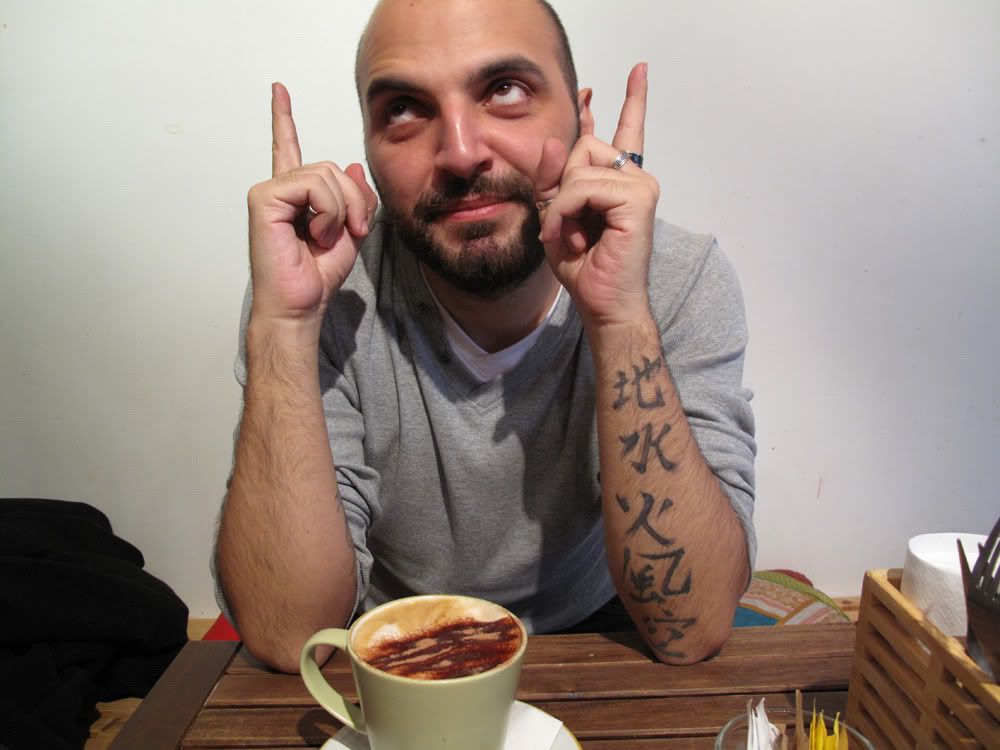
For future reference, this is Serkan.
Serkan picked me up, and after some lengthly chats, we went to sleep. The next day was quite amazing for me. As an artist, many things effect me quite dramatically. Aesthetics, culture and many other small details fill me with emotions. I was not ready for this city though.
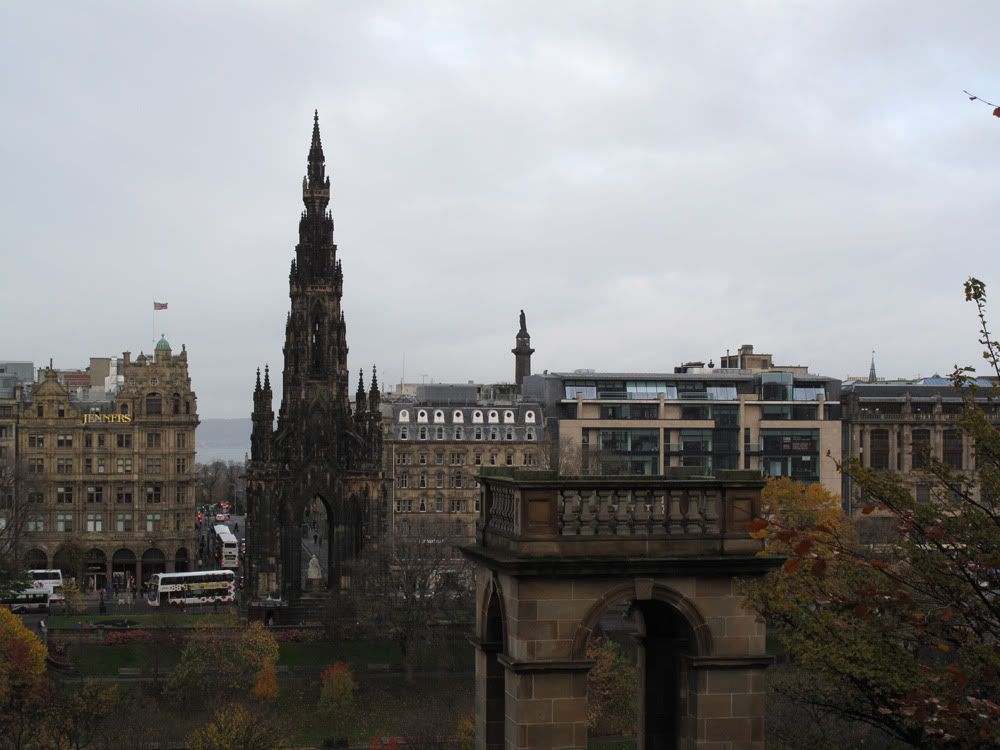
Spires, spires and more gothic buildings! oh my!
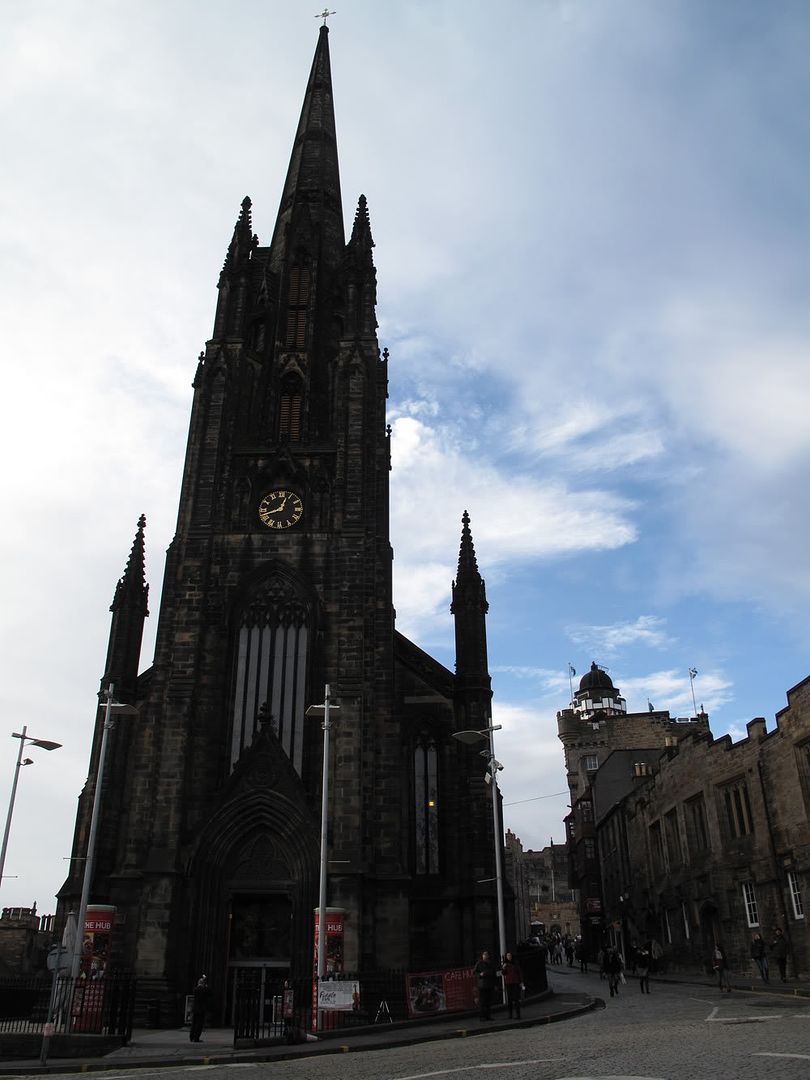
As if saved in a time bubble from 18th century, Edinburgh looks like one of those cities you see in movies about duellists, mages, dark sorcery and witches. From every corner I expected people with rapiers and flintlock pistols running about. The walls and the architecture simply mirrored this old era. Apart from couple of buildings that stood out like 1980's architecture nightmares with the "modern" title (especially bank buildings) The city throughout is able to give you this feeling. I sincerely suggest anyone who has the ability to go there see it for yourselves.
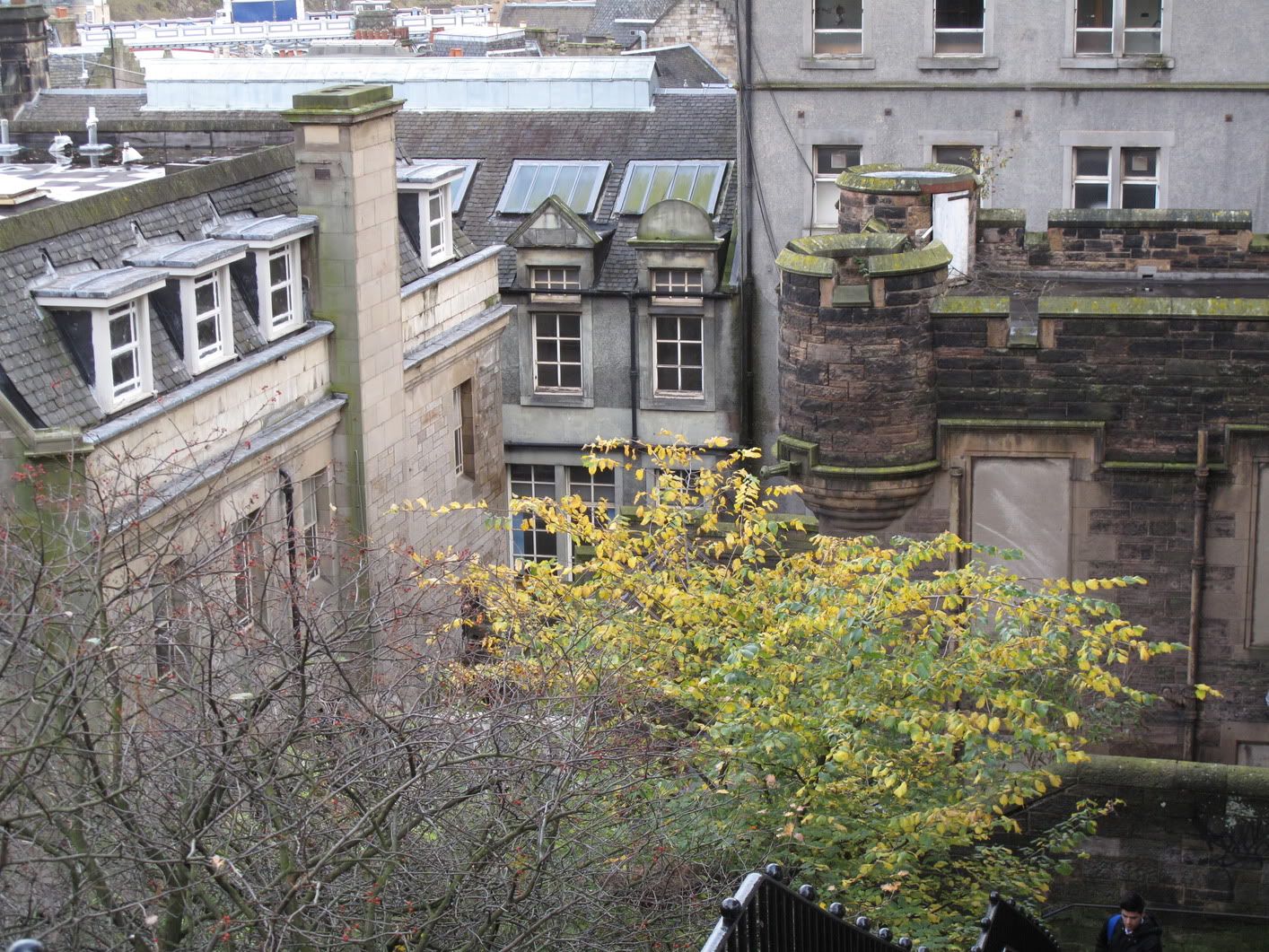
Even random buildings have arrow-slits!
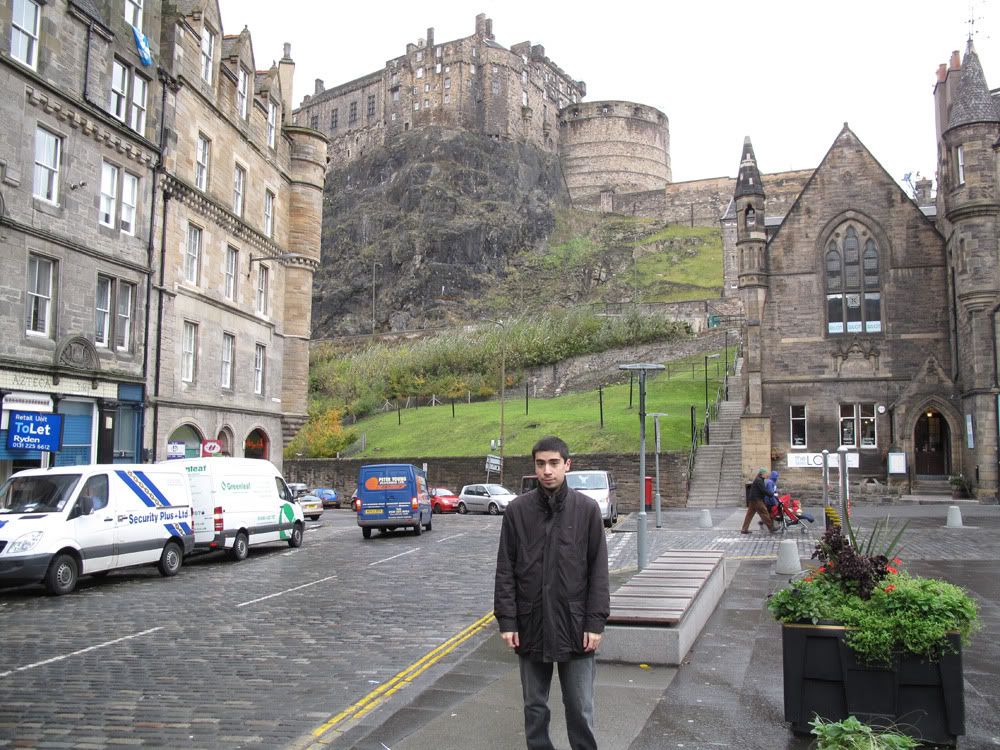
And the city has a castle built on a cliff in the middle of it.
Anyways, focusing on the project. It was the start of this year when Serkan came up with the idea of using my skills not for just computer related imagery, but for mobile phones as well. To be completely honest with you, I still use my old sony w810 cellphone, an ancient history from 2005. I've played around with smartphones before when I had the chance, but the idea of connecting to internet wherever just scares me, as I can quickly get addicted and instead of doing my normal chores while travelling, which is reading many many books, I would just chat online with friends. The idea was quite ungrown at that time though. We just had the idea of making a narrative story aided with imagery, which would be on a mobile.
There was a lot of brainstorming as we walked around Edinburgh like proper tourists, and to be honest, it was my first time visiting somewhere with a camera, I just always hated the idea, but damn it was fun!
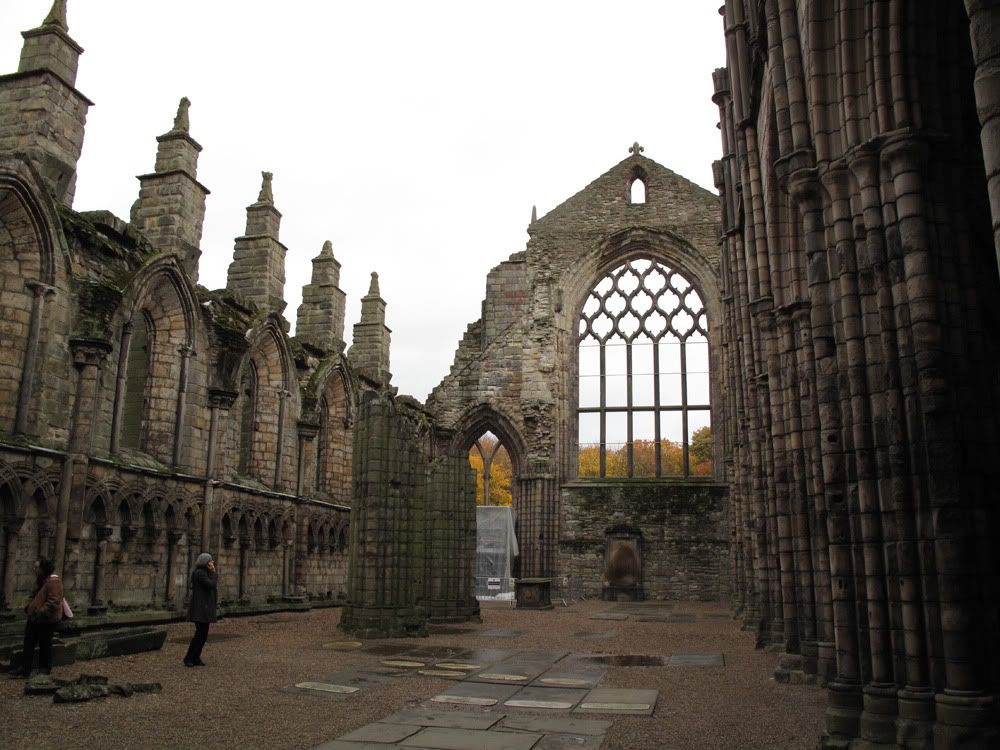
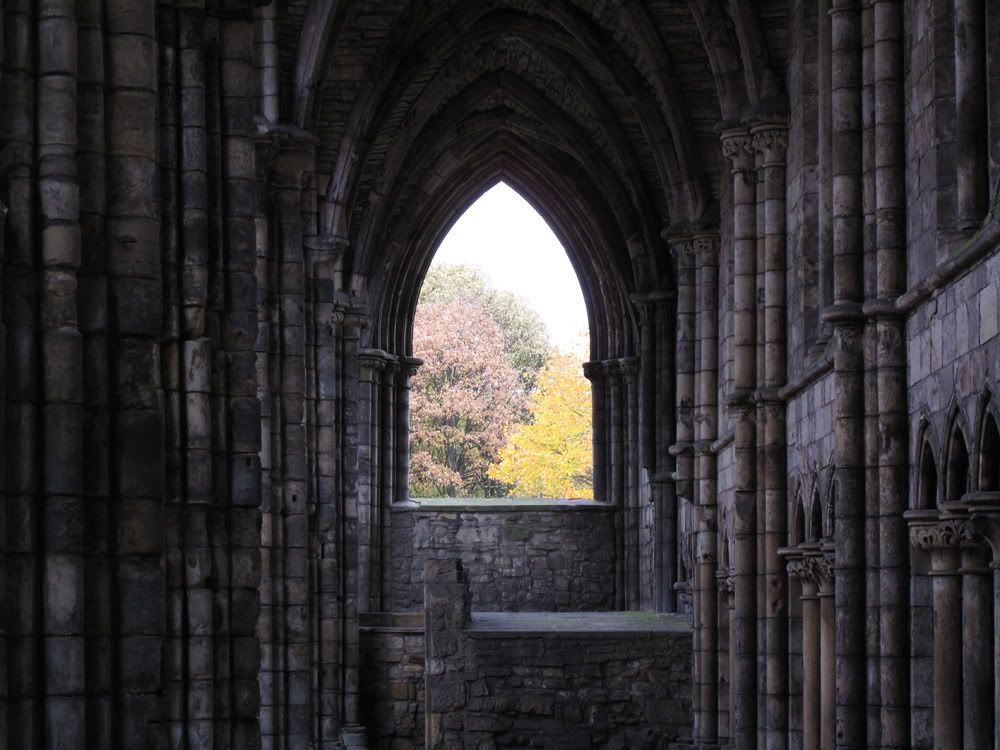
Anyways, what we have in mind right now is a game where people will walk about in a city, unlocking clues and mysteries, just like a detective movie, or the DaVinci code(urgh). It's going to be a "Location Based Narrative Advanture Game which plays with your sense of Reality" if we need long and unusable titles for the future!
We came up with seperate ideas. I wanted to use the telephone screen like a HUD (heads up display) you have in games and fighter jets, where you would be informed about your surroundings, using the device as a "Looking Glass" to the real world. I wanted people to twirl, look through and just walk around using their cellphones like a mirror in a dark room when they couldn't see the vampire that was hunting them. I want people to look at their smartphones not as a smartphone, but something arcane and magic which has a special value.
Serkan wants to make the narrative into layers. The idea is, while the player is playing the game, he will gradually unlock layers into the unreal, seperating our world from what we want to show.
The final layer will be something completely different, something maybe mad to see, a mirroring of our reality in some wicked dimension.
Other ideas flew around in the next couple of days. We watched the 5th of november firework show on top of a hill while discussing the subject. I wanted to include the idea of a "Fog of War" in the game. I think it would be fun for the player to unlock this other "map" on top of our real-world map like the googlemaps on gps. As he walks around, he would unravel the city slowly, and maybe seperate quests would show up, and he could go investigate them. I am not sure if this is even possible, but it would be quite fun.
Serkan, always the realist, is more concerned about the technological aspects.
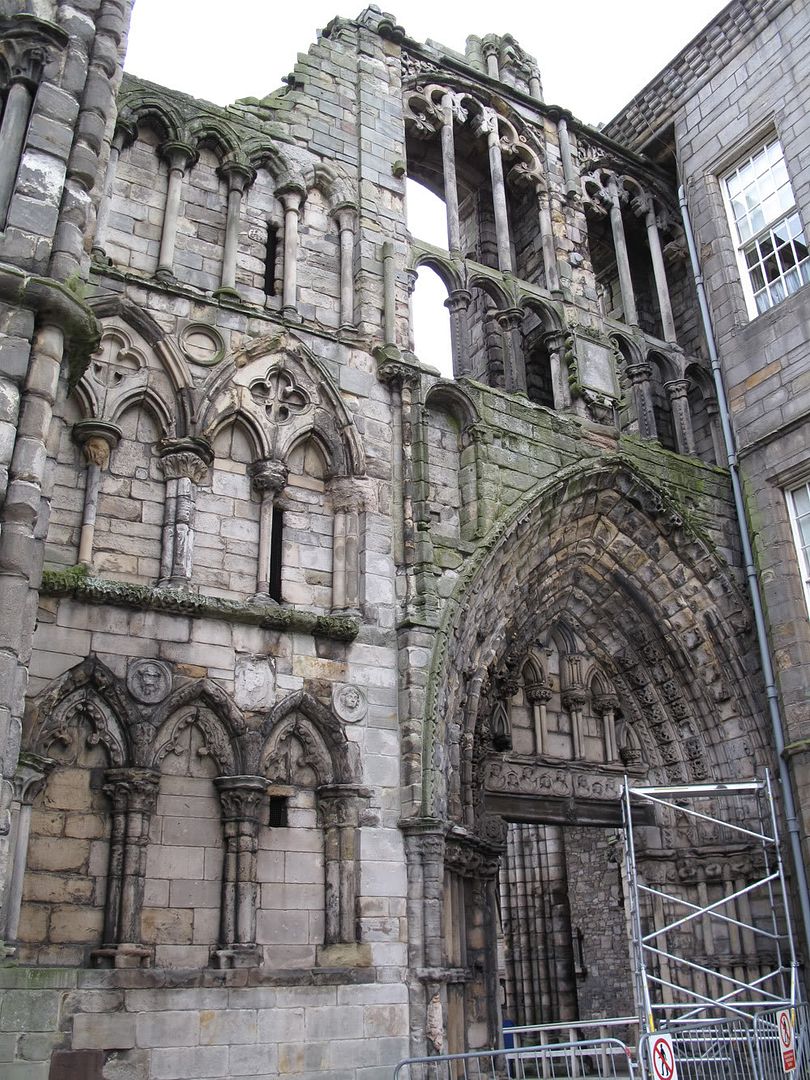
Next, while walking about museums, and speaking about the addictive parts of games, came the idea of making it a bit thrilling for the players at some points. I want the players to do what they wouldn't normally do in real world, ofcourse without getting them into much trouble. My example would be a person in a library, where the game asks him to shout at a specific decibel for unlocking the next secret, perhaps the echo from his vantage point would reveal some clue about the storyline. Normally a person wouldn't shout or scream in a library, and it would be pretty fun to do it once, while not putting the gamer in danger and probably helping some adrenaline run through his body, which is the whole point.
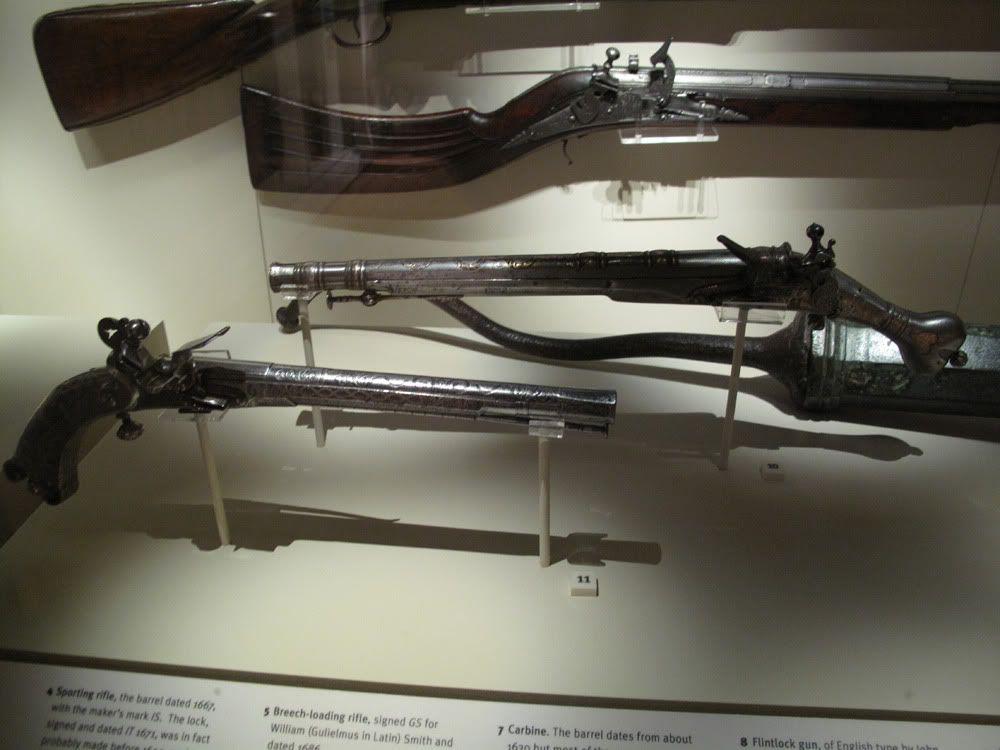
Museums filled with rapiers and flintlock pistols!
My other example was counting the amount of windows of the castle from a specific point in the middle of the street, standing on a zebra crossing. Again the same principle of not putting the player in danger, but excitement of doing something not right while trying to count the windows would be quite fun while people are honking and yelling at the player.
We spoke about which OS(operating system) to use for this project. Although I don't have any experience in coding, especially for smartphones, thankfully Serkan has some ideas, and selected Android system to use for this project much to my delight, I just really really hate Apple.
I'll write this much for now, I'll include some photos I've taken over the course of this 4 day trip, and write more later.
(MA) The week of travels!
Oh my...where to begin!
I will probably do seperate entries for each idea I have in mind after this mad week I've gone through. I went to Edinburgh and Nottingham, met with A LOT of people in my area and other expertises, and finally the seeds for our project are thrown in the soil.

Hum hum hum, so much to write about!
I am planning to write my ideas and what we've done under
1- Edinburgh
2- London
3- Nottingham
seperate entries, what we've spoken about with Serkan (Who's the guy I'm doing the project with, but we'll come to that later) and how the project is forming. I will also provide some pictures, because Edinburgh may well be the most exciting city I've ever seen.
Anyways, more will come today, let me wake up first and eat something, too many coach and train rides are taking their toll from my body!
I will probably do seperate entries for each idea I have in mind after this mad week I've gone through. I went to Edinburgh and Nottingham, met with A LOT of people in my area and other expertises, and finally the seeds for our project are thrown in the soil.
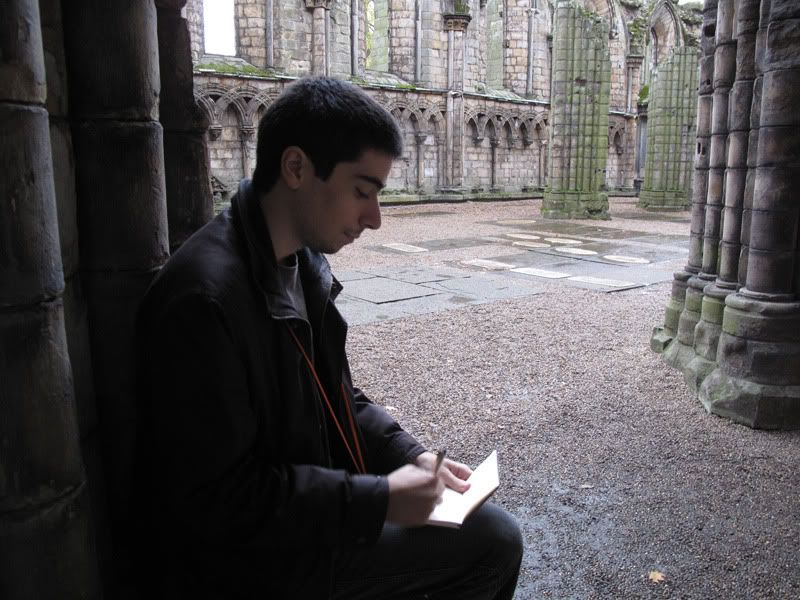
Hum hum hum, so much to write about!
I am planning to write my ideas and what we've done under
1- Edinburgh
2- London
3- Nottingham
seperate entries, what we've spoken about with Serkan (Who's the guy I'm doing the project with, but we'll come to that later) and how the project is forming. I will also provide some pictures, because Edinburgh may well be the most exciting city I've ever seen.
Anyways, more will come today, let me wake up first and eat something, too many coach and train rides are taking their toll from my body!
Subscribe to:
Posts (Atom)